Showing posts with label Goal setting. Show all posts

Tuesday, 12 June 2012

Set Goals, And Yet Not Successful?


Many people set goals for themselves but find it hard to achieve anything. Even simple to do lists for the day don’t get ticked off as often as they would like!
It is this lack of focus that is stopping many people from achieving success.
Common problem — people know they should be doing something productive to help themselves but they don’t do it. They get distracted too easily.
So for example, people don’t want to wait and build a business online, they want to succeed within the next 36 hours– in reality this does not happen.
The question is, how can we focus more?
I think you’ve already knew the answer — by setting out specific goals and having a clear vision of the outcome that we want to accomplish, and once we know why we are doing something, we will find it easier to stick to.
For example you want to make $500,000 this year from the internet. Therefore you know that every minute you spend at the computer has to be productive. Why? Because the more productive you are, the closer you will be to getting to you goal of making $500,000 this year.

Obviously, you know what you need to do. If you do get distracted you know you have the choice of continuing with the activity that is distracting you or going back to being productive and working towards your goal.

The trick is, in order to stay focused, you need sheer determination. These two go hand in hand because focus without determination is not going to let you move forward and determination without focus means you don’t have a direction to move towards. Do you see the connection now?
You must be determined to succeed. Many people begin very determined and then start to make excuses. Hey, focus!
Remember success can take time. Overnight success is a… well, a rarity. Research shows that you need to do something for 28 days (or is it 21?) in a row before it becomes a habit. So begin to work at being successful and keep doing it.
Keep the long term goal in mind for everything that you do. It’s very easy to get distracted in the short term but this distraction — watching TV, going for a drink, can have affects that reaches the long term goal.
By focusing on the long term goal, your determination will come in.
Does this mean that you can’t watch TV, go for drinks with friends or do other non-productive things? Of course not.

But there is a time for everything. Be as productive as you can with the time you have in a day but allow yourself the down time as well to enjoy yourself and relax. Get back on the horse after that and achieve the next milestone.

But sometimes, it’s not because lack of determination — it’s limiting beliefs.
Limiting beliefs are beliefs that you can’t do it, you can’t make a change, you will fail, only other people succeed and so on. The fact is, we have so many limiting beliefs and many people have an inner critic that tells them they can’t do things.
So before a person wanted to start, he has already loses his confident.
Here are more examples of what someone might think or say to himself if he wanted to quit his job to start a business:
* I might as well stay in my job, as it’s not so bad
* If my business fails, I will lose everything
* I can’t succeed online — it’s all a scam
* What if I try something and I don’t succeed… people will laugh at me
* I don’t have time to do it


The last excuse is probably the most often use and the most preposterous — however bear in mind that we ALL only have 24 hours in a day. Believe it or not, even the most successful people in the world only have the same amount of time. icon smile Set Goals, And Yet Not Successful? It’s just how we use those hours that’s important.
So what happens is, you listen to this critic and never take action. Many people feel if they don’t try something then they can’t fail — yup, “weird” logic but people actually think unconsciously like this.
Stop and listen to yourself and see if you can recognize your “inner critic”, hear what it is saying to you. Many of us have one and it can really stop us succeeding! Take a few minutes and complete this simple exercise.
As yourself, “What’s my excuse?”
Write down all the “excuses” you make for not doing something.
Now go back to your list and write out fully why what you wrote above is actually a limiting believe — try to really prove why it is true. Be honest.

When you really examined these thoughts that you had, you will realize that they were excuses you were making.

So the next time you stop yourself from doing something, pause and take the time to examine your thoughts. Is the reality really like that or is it just your inner critic talking?
The secret to stop your inner critic — make yourself bigger than your excuses.

Written by Patric Chan


Monday, 21 May 2012

What Comes First, Prioritization or Planning?


If you have a long list of to-dos and at times you feel like 24 hours is not enough, then setting priorities for your life is crucial if you want to get things done. Prioritization means to arrange (items to be attended to) in order of their relative importance. The more projects you are involved in and the more you do for your business and personal life, the more you need to prioritize your activities. Creating priorities is a bit different from planning your day.  What comes first, that wagon or the horse? In this case, what should you do first, plan, or prioritize?
You need to be clear on what is most important to you before you begin to plan your day. If you plan your day based on everything that needs to get done vs. planning your day according to importance, you may end up “doing” things but not accomplishing much. Here are three super simple things you can do prioritize your day before you plan:
  1. What is most important for you today? Priorities can shift based on previous days, mood, etc. Before you begin your day, be clear on your intention and what you want to accomplish. If nothing else happens today, what must take place? Identify what you want to achieve and set your priority and intention for today based on that only. If you manage to accomplish others things, great! If not, you have accomplished what you set out to do, which is very powerful!
  2. Limit your priorities. If everything that needs to get done seems to be of high importance to you, you must then use the ABCs of prioritization. After making your list, place an A next to things of super duper high importance that must get done today. Place a B next to things that should get done today but won’t stop you from moving forward if it doesn’t get done. Place a C next to the things that will only get done after everything else and won’t cause panic if they are not done.
  3. Evaluate your progress. At the end of your day, look at what you accomplished and evaluate your efforts. If there is area for improvement, then note what went wrong and try again tomorrow. By taking a closer look at the way you handle your priorities will help you create a better success for each day that follows.
Prioritization is a learned skill and it gets better and better with time. Take time before beginning your day to get organized, prioritize, and then plan for your success! I’d love to hear how you organize your day and what has worked! Share your comments below!

Thursday, 5 April 2012

5 Ways To Change A Habit


Habits make up 40 percent of our daily behaviors, according to studies. And yet, because habits unfold within our basal ganglia – one of the oldest parts of the brain – they often feel nearly unconscious. So how do you change a habit? By diagnosing it’s components, and reprograming the behavior. Here’s how to do just that:
1. Identify your habit’s routine
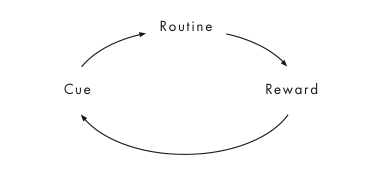
There is a basic pattern at the core of every habit, a kind of neurological loop that has three parts: A cue, a routine and a reward.
To understand your habit, you need to identify the components of your loop. The easiest place to start is with the routine: what behavior do you want to change? (For instance, I once had a bad habit of eating a cookie from the cafeteria every afternoon.)
2. Experiment with different rewards
Rewards are powerful because they satisfying cravings. But we’re often not conscious of the cravings that drive our behaviors. To figure out which cravings are driving particular habits, it’s useful to experiment with different rewards. For instance, on the first day of my experiment to figure out what was driving my cookie habit, when I felt the urge to go to the cafeteria and buy a cookie, I instead went outside, walked around the block, and then went back to my desk without eating anything. The next day, I went to the cafeteria and bought a donut, and ate it at my desk. The next day, I bought an apple and ate it while chatting with my friends. Eventually I figure out that what I was really craving wasn’t cookies, but socialization: Whenever I went to the cafeteria, I saw my friends.
3. Isolate the cue
Every habit has a cue, and experiments have shown that almost all habitual cues fit into one of five categories:
Location
Time
Emotional State
Other People
Immediately preceding action
So, if you’re trying to figure out the cue for the ‘going to the cafeteria and buying a chocolate chip cookie’ habit, you write down five things the moment the urge hits (these are my actual notes from when I was trying to diagnose my habit):
Where are you? (sitting at my desk)
What time is it? (3:36 pm)
What’s your emotional state? (bored)
Who else is around? (no one)
What action preceded the urge? (answered an email)
After just a few days, it was pretty clear which cue was triggering my cookie habit — I felt an urge to get a snack at a certain time of day. The habit, I had figured out, was triggered between 3:00 and 4:00.
4. Have a plan
Once you’ve figured out your habit loop — you’ve identified the reward driving your behavior, the cue triggering it, and the routine itself — you can begin to shift the behavior. You can change to a better routine by planning for the cue, and choosing a behavior that delivers the reward you are craving. What you need is a plan.
A habit is a formula our brain automatically follows:

When I see CUE, I will do ROUTINE in order to get a REWARD.
So, I wrote a plan of my own:
At 3:30, every day, I will walk to a friend’s desk and talk for 10 minutes.

It didn’t work immediately. But, eventually, it got be automatic. Now, at about 3:30 everyday, I absentmindedly stand up, look around for someone to talk to, spend 10 minutes gossiping, and then go back to my desk. It occurs almost without me thinking about it. It has become a habit.
5. Look for ‘keystone habits’
But where should a would-be habit master start?
Our lives are filled with habits, and time is limited. Knowing how to improve behaviors doesn’t resolve a central question: where to begin? Is it better to create an exercise habit, or reform eating patterns? Should someone focus on procrastination? Or biting their fingernails? Or both at the same time?
The answer is to focus on ‘keystone habits.’ Some habits, say researchers, are more important than others because they have the power to start a chain reaction, shifting other patterns as they move through our lives.  Keystone habits influence how we work, eat, play, live, spend, and communicate. Keystone habits start a process that, over time, transforms everything.
Identifying keystone habits, however, is tricky. To find them, you have to know where to look. To begin, ask yourself a central question: which habits are most core to my self image? Does exercise make you think about yourself in a different – and better – way? Then exercise might be your keystone habit. Or is it how you communicate with your spouse and kids? That might be your keystone habit. Or, how you get work done?
There are dozens of potential keystone habits, and my book spends significant time explaining how to identify and change them. But, at their core, they all share something in common: keystone habits shape how we think about ourselves. And all of them can be changed, once you know how to diagnose and influence the habit loop

Written by: Charles Duhigg